Best Time to Post on Twitter: 2026 Guide
Find the best time to post on Twitter in 2026. Our guide reveals 8 data-backed windows, industry tips, and automation for peak engagement.
Beyond the Clock: Finding Your True Best Time to Post on Twitter/X
The most useful recent signal for timing isn't a single magic hour. It's a pattern. Sprout Social's 2026 analysis identifies Tuesday through Thursday, 12 p.m. to 6 p.m. local time as the strongest overall window for X engagement, while OpenTweet reports Wednesday as the best single day, with engagement running 17% above the weekly average, and Sunday sitting 23% below it in the same dataset, according to Sprout Social's X timing analysis.
That matters even more in Britain. The UK had 49.2 million social media users as of January 2024, equal to 72.0% of the population, inside a market with 66.7 million internet users and 91.0% internet penetration, according to OpenTweet's UK timing study. In a market that connected, small timing shifts can change whether your post lands during a lunch break, a commute scroll, or dead space.
That's why the best time to post on Twitter isn't one slot you memorise. It's a timing portfolio. A founder launching a product thread, a retailer pushing an offer, and a creator reacting to breaking news shouldn't all use the same schedule.
Table of Contents
- 1. The Peak Hours Strategy
- 2. The After-Hours Engagement Strategy
- 3. The Early Morning Strategy
- 4. The Weekend Strategy
- 5. The Industry-Specific Timing Strategy
- 6. The Thread Launch Timing
- 7. The Timezone Staggering Strategy
- 8. The Trend Jacking and Real-Time Response Timing
- 8-Strategy Twitter Timing Comparison
- From Data to Done Automate Your Perfect Twitter Schedule
1. The Peak Hours Strategy
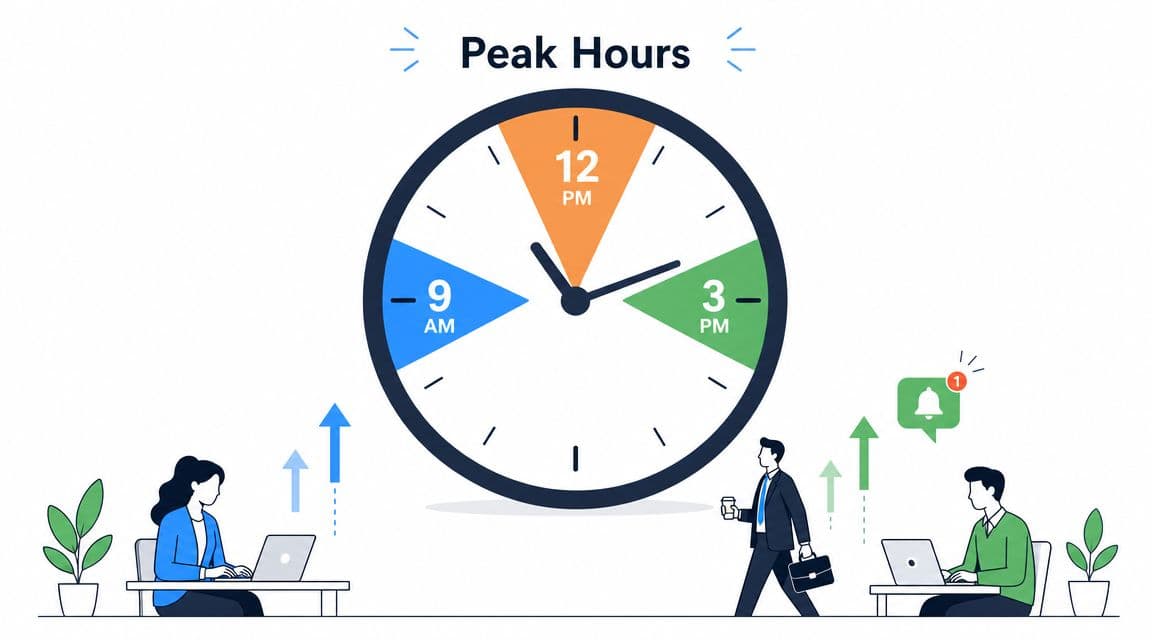
Most brands should start here. If you want the safest default for the best time to post on Twitter, use weekday working hours first, then refine. Broad studies don't agree on one exact hour, but they do converge on a weekday rhythm centred on active professional and general-user browsing.
Use the broadest proven window first
Buffer's 8.7 million-post analysis names Tuesday at 9 a.m. as the top slot and says other studies also converge on midweek mornings, according to Buffer's Twitter/X timing research. That doesn't cancel the midday findings noted earlier. It gives you a useful operating range. If your audience is broad, weekday daytime beats random posting.
For UK teams, local interpretation matters. “9 a.m.” only helps if you mean 9 a.m. where your audience lives. British accounts also need to think about GMT and BST shifts, because an apparently small scheduling error can move a post out of the workday rhythm and into a quieter period.
Practical rule: If you're testing from scratch, use weekday daytime as your control schedule and judge everything else against it.
How to run it without flooding your feed
A good peak-hours setup isn't “post more”. It's “post on purpose”. Schedule one post for the morning, one around lunch, and one in the early afternoon, then compare reply quality, repost patterns, and click behaviour by slot.
Use a visual scheduler so you can see spacing before you publish. Tools like Scheduler.social for Twitter scheduling make it easier to place recurring posts, avoid stacking your own updates too closely, and keep your strongest content in the hours most likely to get early engagement.
- Anchor one repeatable slot: Keep one dependable weekday time each week so comparisons stay clean.
- Separate content by intent: Put commentary and insight posts in the morning, and broader appeal posts around lunch.
- Watch the first hour: On X, the opening response often tells you whether a slot deserves a second test.
Real-world fit is straightforward. A SaaS founder sharing a product lesson, a consultancy posting a market take, and a media brand pushing a sharp headline can all start in peak hours because audience availability is broad and predictable.
2. The After-Hours Engagement Strategy
The after-hours window is where many marketers either overestimate or underuse X. They overestimate it when they treat evening posting as automatically “more relaxed, so more engagement.” They underuse it when they assume nobody serious is online after work. Both views are too simple.
Why this window still matters
UK-specific guidance from Diib says the best time to post on Twitter in the UK is typically during the lunch hour from 12:00 to 1:00 p.m. local time, while 4:00 to 6:00 p.m. delivers average engagement levels, according to Diib's UK Twitter timing guide. That's useful because it shows late afternoon isn't dead space. It's just not the highest-confidence window for every account.
This makes after-hours posting a secondary strategy, not a primary one. Use it when your content matches end-of-day behaviour. People browse differently at that point. They're less likely to want dense analysis and more likely to engage with lighter commentary, product teases, lifestyle framing, or conversation starters.
What to post after work
After-hours works best when the post feels easy to consume and easy to answer. A consumer brand can ask for opinions. A founder can share a behind-the-scenes update. A creator can post a quick take that invites replies rather than demanding attention.
Try this structure:
- Lead with something immediate: A visual, a punchy opinion, or a short question travels better than a dense thread.
- Match the mood: Use evening slots for recaps, reactions, or softer promotional posts.
- Test separate sub-windows: 5 p.m. behaviour isn't the same as 7 p.m. behaviour.
A DTC brand, for example, might reserve after-hours for social proof, creator reposts, or product-in-use content rather than a formal launch announcement. A local business might post just before commute home or early evening when customers have room to browse.
If your midday posts earn clicks and your evening posts earn replies, you don't have one best time. You have two different jobs for two different windows.
3. The Early Morning Strategy
Morning posting still deserves a place in a serious X strategy, but not for the reasons people usually give. It isn't “early equals better.” It's that some audiences check X before meetings, before school runs, or before their inbox takes over.
Use local morning intent, not imported time charts
Early slots are strongest when they line up with habit. News-followers, market-watchers, commuting professionals, and highly online niche communities often scan quickly and decide fast. That changes what should go live then. Posts need to be instantly legible.
The trap is copying a universal chart without checking local context. If your audience is mainly in the UK, your morning schedule should be built around UK routines, not another market's office hours. This is one of the clearest reasons the best time to post on Twitter has to be tied to audience location, not just platform-wide averages.
Best fits for early posting
Use early morning for content with a short decision path. Strong examples include commentary on overnight developments, a concise opinion thread opener, a product tip, or a headline-style insight.
A few patterns work well:
- News and analysis accounts: Early posts can catch the first serious scroll of the day.
- Founders and operators: Practical observations often land well before work starts.
- Fitness, productivity, and habits content: These themes naturally fit a morning mindset.
What usually fails in this slot is complexity without urgency. A long promotional thread at 7 a.m. asks too much unless the topic is already hot.
For a UK startup founder, an early post might be a clear one-line lesson from yesterday's launch. For a journalist, it might be a fast take on the day's biggest story. For a creator, it might be a useful habit or workflow tip. The common factor is immediacy.
A better test than “Did it get likes?”
Judge early morning posts on what kind of engagement they attract. Morning audiences often signal value through saves, thoughtful replies, or qualified clicks rather than casual conversation. If the responses are sharper, the slot may be worth keeping even if it looks quieter on the surface.
4. The Weekend Strategy
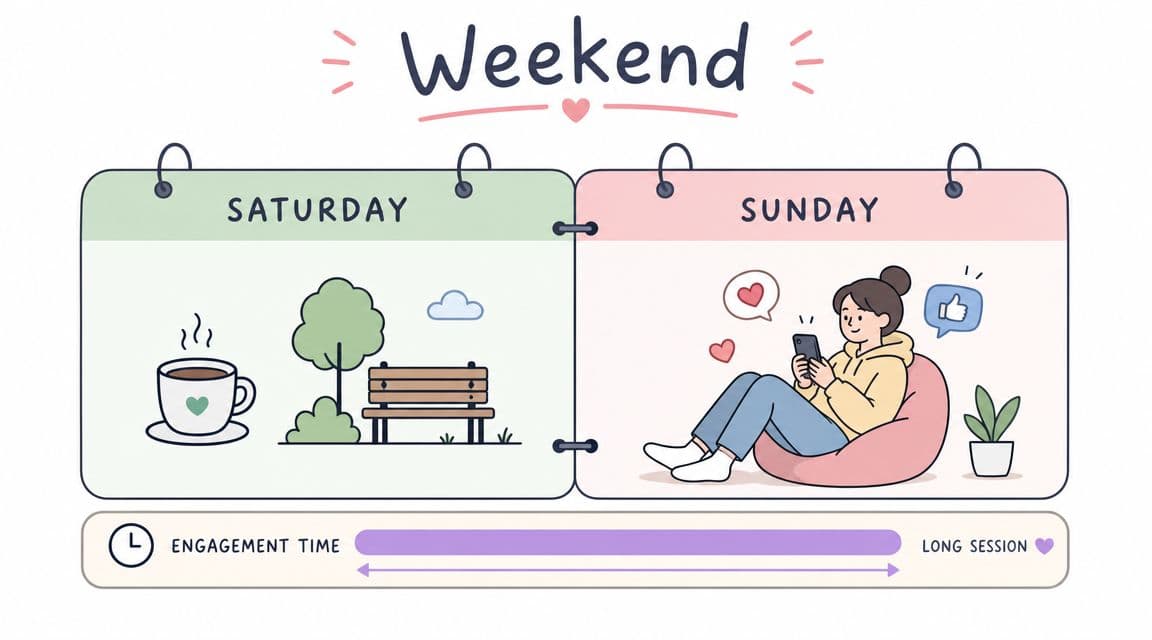
Weekend posting is where many content calendars become lazy. Teams either dump queued posts into Saturday and Sunday because there's empty space, or they avoid weekends entirely. Neither approach is disciplined.
Treat weekends as selective, not default
The broader evidence says weekends are weaker for X. That doesn't mean “never post”. It means don't place your most important content there unless your audience has a proven weekend habit or your niche is naturally leisure-driven.
That distinction matters. A gaming community, a sport-focused creator, a travel brand, or an entertainment account may still find strong pockets of attention at the weekend because the audience mindset changes. People have more discretionary time, but they're also less interested in routine business content.
What earns a weekend slot
Good weekend posts usually do one of three things. They entertain, they recap, or they invite community participation. Hard sells and formal announcements often struggle unless the topic is already anticipated.
Use weekends for:
- Community prompts: Questions, polls, preferences, and lightweight debates.
- Leisure-aligned content: Travel inspiration, hobbies, culture, sport, food, or humour.
- Catch-up formats: Weekly summaries, “in case you missed it” posts, and curated highlights.
A fashion brand can share styling inspiration. A football creator can react live to fixtures. A travel company can post destination content that matches browsing-for-fun behaviour.
Weekend slots work best when the audience is choosing to linger, not rushing between obligations.
The mistake is treating Saturday and Sunday like slower versions of Tuesday. They're different environments. If you post then, write for that reality. Use a more relaxed voice, stronger visuals, and a lower-friction ask.
Batching helps here. Teams often do better when they prepare weekend content in advance on Friday, then reserve live energy for comments and trend responses rather than writing from scratch.
5. The Industry-Specific Timing Strategy
General timing advice is useful until it starts costing you precision. The biggest mistake in X scheduling is assuming platform-wide behaviour always maps neatly to niche behaviour. It doesn't.
General platform advice breaks down by niche
A B2B software buyer, a restaurant customer, and a school community don't check X in the same way. Industry affects why people open the app, what they want when they're there, and how much time they'll give a post.
That means your real best time to post on Twitter might sit inside the broad midweek daytime pattern, or outside it. A hospitality brand may see stronger results when people are imagining plans. A founder-led SaaS account may perform best when operators are taking a short break from work. A local public-service account may need predictable weekday timing because clarity matters more than experimentation.
How to build an industry timing map
Start with a four-week audit of your own account. Group posts by content type, day, and posting window. Then compare not just engagement volume, but engagement quality. Replies from customers, leads, journalists, or potential partners matter more than vanity metrics.
A structured tool helps here. If your team is comparing options, this guide to social media post scheduler comparisons is useful for thinking about workflow, analytics, approvals, and recurring slot management.
Build your map around three questions:
- Who is the audience in their working day: Desk-based, mobile, shift-based, or leisure-first?
- What triggers their usage: News, problem-solving, entertainment, or purchasing intent?
- Which format suits their attention span: Fast takes, image-led posts, or threads?
A practical example. A cybersecurity firm might keep thought leadership in weekday daytime slots because the audience is in work mode. A coffee chain might test lunch and early evening because daily routines shape demand. A university department might find stronger engagement outside strict office hours because students and parents browse differently from professionals.
The lesson is simple. Use global timing studies as your map legend, not your final route.
6. The Thread Launch Timing
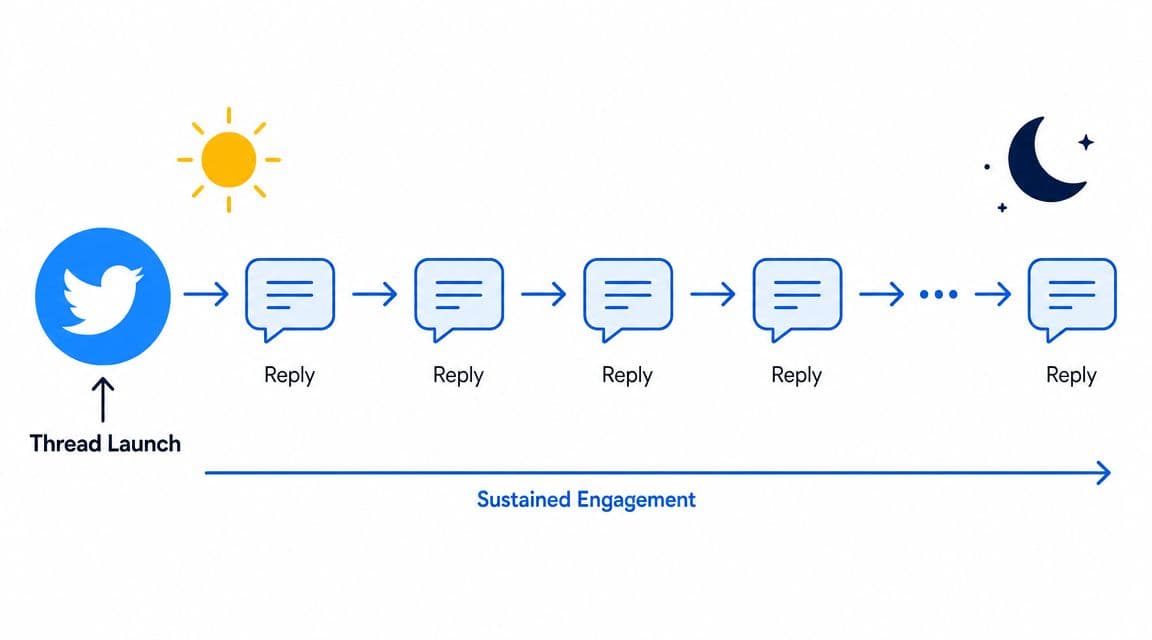
Threads should be timed differently from single posts. A standalone tweet rises or falls quickly. A thread has two jobs. The opening post has to win discovery, then the rest has to hold attention long enough for readers to continue and respond.
Start threads when discovery is highest
That's why midday often makes more sense for threads than for lighter posts. If your audience is browsing during lunch or during a mid-afternoon pause, they're more willing to commit to a multi-post idea than they are during a rushed morning glance.
A founder announcing a product change, an analyst breaking down a trend, or a developer explaining a technical concept all benefit when the first post lands during a proven high-attention window. The opening line should be shorter than you think, and clearer than you think. Threads fail when the first post reads like paragraph three.
Plan the second wave of engagement
Good thread timing doesn't end at publication. Replies later in the day can extend visibility and restart the conversation. That's especially true if people discover the opener midday, save it, and return to comment later.
Use a simple operating model:
- Launch when passive discovery is high: Midday and afternoon are strong starting points.
- Stay available after posting: The first one to three hours matter for replies.
- Seed follow-up interaction later: Answer questions, clarify points, or quote-post the thread with a new angle in the evening.
A tool that supports drafting, approval, and scheduling helps avoid thread errors. If several people review copy or creative before launch, that matters even more. Broken numbering, weak openers, or buried links can ruin the format even when timing is right.
Threads need a launch time and a stewardship plan. Posting the opener is only half the job.
7. The Timezone Staggering Strategy
If your audience is international, one posting time won't do the job. In this situation, the idea of a single best time to post on Twitter breaks completely.
One post time won't serve a global audience
Large timing studies repeatedly stress local time, not a central publishing clock. That matters because a post scheduled for convenience in one region may land while another region is asleep, commuting, or deep into meetings.
UK teams often miss this when they think “global” but still post on a domestic rhythm. A London-based brand with customers in North America, Europe, and Asia can't rely on one launch if the post matters commercially. A product release, campaign message, or webinar announcement should meet audiences in their own active windows.
How to stagger without repeating yourself badly
Staggering works best when you vary framing slightly rather than reposting the exact same line over and over. The core asset can stay the same. The angle should adapt.
A practical model looks like this:
- Choose your primary regions: Usually the top markets by audience relevance, not vanity reach.
- Match each to local active periods: Use known weekday daytime peaks as a baseline.
- Rewrite the hook each time: Keep the same destination, but change the opening sentence.
- Protect against audience overlap: Space repeat posts far enough apart that frequent followers don't feel spammed.
For teams managing this across campaigns, a planning system matters more than another generic timing chart. This buyer-oriented guide to social media scheduling software selection is helpful if you're deciding what kind of workflow support you need for staggered publishing, approvals, and regional scheduling.
A global SaaS company might post a feature launch first for Europe, then adapt the copy for North America later. An open-source project might publish one technical announcement with separate hooks for developer-heavy time zones. A creator with split UK and US audiences might reserve one educational post for each market's workday.
8. The Trend Jacking and Real-Time Response Timing
No static schedule can beat a relevant live moment. Trend-responsive posting is the one strategy where speed often matters more than any pre-planned slot.
Speed beats perfect timing charts
X is still built around recency and conversation. When a topic breaks, users don't wait for the “official best time” chart. They react now. Brands, creators, journalists, and founders who have something useful, funny, or distinctive to add can win attention by moving fast.
This isn't an argument for random posting. It's an argument for preparing to post outside your normal calendar when the context is right. A food brand responding to a cultural joke, a startup reacting to industry news, or a sports account posting during a decisive match all operate under a different timing logic.
How to respond fast without sounding reckless
The best real-time teams prepare before the moment arrives. They know what topics fit the brand, who approves copy, and how far they can push tone.
Use this workflow:
- Define what counts as relevant: Not every trend deserves your logo on it.
- Prepare response templates: Keep starting points for humour, commentary, and rapid updates.
- Assign approval rules in advance: Decide what can go live instantly and what needs review.
- Stay close to the conversation after posting: Real-time wins come from replies as much as the first post.
A good example is a brand with a clear voice and strong boundaries. It doesn't chase every trending phrase. It waits for moments where speed and fit align. A founder account can do the same by commenting on breaking product or market news only when there's a real point of view, not a forced participation attempt.
The strongest trend posts feel native to the timeline. They sound like your account was already paying attention, because it was.
8-Strategy Twitter Timing Comparison
| Strategy | 🔄 Implementation Complexity | ⚡ Resource Requirements | 📊 Expected Outcomes | Ideal Use Cases | ⭐ Key Advantages / 💡 Tips |
|---|---|---|---|---|---|
| Peak Hours (9 AM–3 PM weekdays) | Medium, consistent scheduling and timezone handling | Moderate, scheduling tools + analytics | High immediate visibility; typical 15–25% engagement lift | B2B, news, time-sensitive business announcements | ⭐ High reach during work hours; 💡 Stagger posts 15–30m and test times in your primary timezone |
| After-Hours (5 PM–8 PM) | Low–Medium, simpler cadence, evening testing | Low, lightweight creative + scheduling | Second-highest engagement with longer visibility per post | B2C, lifestyle, entertainment, promotional offers | ⭐ Less competition than midday; 💡 Schedule promos at 5–6 PM and test 5/6/7 PM slots |
| Early Morning (7 AM–9 AM) | Low, timezone-sensitive timing | Low, early-post creatives and scheduling | Highly engaged niche audience but smaller absolute reach | News, motivational/productivity content, founders | ⭐ Engaged, committed followers; 💡 Post 30–60 minutes before target audience starts work |
| Weekend (Sat 9 AM–Sun 8 PM) | Low–Medium, requires alternate content planning | Moderate, batch content + weekend-focused creatives | Longer session durations, higher viral potential, lower brand competition | Lifestyle, entertainment, community, travel, consumer brands | ⭐ Extended engagement and visibility; 💡 Batch-schedule Friday, post Sat 9–11 AM & Sun 5–8 PM |
| Industry-Specific Timing | High, research, audits, ongoing tuning | High, analytics, testing, audience research | Very targeted relevance; often higher-quality engagement and ROI | Any niche where audience habits differ from general norms (SaaS, healthcare, finance) | ⭐ Outperforms generic timing; 💡 Run a 4-week audit and save custom posting times for your vertical |
| Thread Launch Timing (midday start, evening replies) | High, orchestration of launch + follow-ups | High, quality writing, active engagement team | Sustained engagement over hours/days; strong thought-leadership performance | Long-form explanations, product launches, educational threads | ⭐ Maximises initial visibility and sustained momentum; 💡 Launch 12–2 PM, schedule/manual replies later in day |
| Timezone Staggering | Medium–High, coordination across multiple schedules | High, multiple posts, content variations, scheduling tools | Maximises global reach but increases posting frequency and tracking complexity | Global brands, international SaaS, influencers with broad followings | ⭐ Reaches local peaks worldwide; 💡 Identify top regions and create 3–4 adapted variations, repeat ~6–8 hrs |
| Trend Jacking & Real-Time Response | Very High, rapid decisions and strong brand judgment | Very High, 24/7 monitoring, fast content & approval workflows | Potential for massive viral spikes; high-risk/high-reward within 2–4 hour windows | Brands comfortable with reactive voice, PR-savvy teams, social-first marketing | ⭐ Highest viral potential when timely; 💡 Prepare templates, set clear participation rules, post within 15–60 minutes of trend |
From Data to Done Automate Your Perfect Twitter Schedule
The best time to post on Twitter isn't a fixed answer you paste into a content calendar once and forget. It's a repeatable process of choosing a timing strategy, matching it to a goal, and measuring what changes. That's the deeper lesson in the data. Broad studies can identify reliable windows, but they can't tell you which window best supports your launches, your audience, or your content mix.
That's why these eight strategies work better as a portfolio than as a checklist. Peak hours give you a stable baseline. After-hours helps with lighter, reply-friendly content. Early mornings can capture intent-heavy audiences. Weekends reward selective leisure content. Industry timing adds context that platform-wide charts can't provide. Threads need launch timing plus follow-through. Timezone staggering matters when you serve more than one region. Real-time response lets you step outside the schedule when relevance spikes.
Many organizations know this in theory and fail in execution. They intend to test, but never keep the variables clean. They mean to stagger by timezone, but end up publishing manually. They want to compare thread performance by slot, but can't track the schedule consistently enough to trust the result.
That's where a dedicated system matters. Scheduler.social turns timing strategy into an operating process. You can map your content visually on a calendar, queue posts across different windows, schedule threads, build approval steps for fast-moving content, and adapt messages for different audiences without rebuilding every post from scratch. Instead of relying on memory and scattered spreadsheets, your team gets a visible schedule and a cleaner record of what was posted, when, and why.
The analytics side matters just as much. Once you've assigned distinct jobs to different posting windows, you need evidence on whether they're working. That means identifying which slots drive discussion, which ones drive clicks, and which ones merely fill the feed without producing value. Good timing strategy is less about finding one perfect hour and more about eliminating bad assumptions faster.
If you're building a broader publishing stack, it also helps to look at adjacent tools for production, creative, and workflow. This roundup of video, design, and AI social media tools is a useful companion for teams that want to tighten the whole content operation, not just scheduling.
The teams that get X timing right don't obsess over one chart forever. They build a system, test deliberately, and keep improving. That's what turns timing from a guess into an advantage.
Scheduler.social gives you a practical way to run all of this without manual chaos. You can plan content on a visual calendar, schedule Twitter/X posts and threads in advance, adapt copy for different timing windows, and manage approvals when multiple people need to review content. If you want to stop guessing and start building a repeatable posting system, try Scheduler.social.